PORTFOLIO
Ridge Road
We leveled a three-building 1980s home on Ridge Road in the Ashland hills and set it on engineered concrete foundations, with new drains, eaves and gutters.
Planning something similar? Ask what your project would cost.




At a glance
- Project: Foundation replacement and leveling, in two phases
- Where: Ridge Road, in the hills above Ashland
- Finished: 2017
- Main work: two buildings leveled and set on new concrete stem walls with a wood-grain finish; new floor framing and beams; seismic connections to the foundation; decks strengthened and railings replaced; new eaves, fascia and gutters; roof drains and foundation drains
- Performance and green features: new floor insulation in place of insulation animals had pulled down
Read the full case study
The house and what the owners wanted
The home is three separate buildings on a wooded hillside, built in the late 1980s, with cedar siding and large decks. When we looked under it in January 2015, the buildings were settling. They stood on posts set in the soil, and roof water was soaking that soil soft. Near the deck, the supports were overloaded, one deck beam had failed, and an area of beams near the middle of one building was sagging. Animals had pulled down the floor insulation.
The owner wanted the house level and stable for the long run.
What was built
Phase one: the kitchen and living building (2015 and 2016)
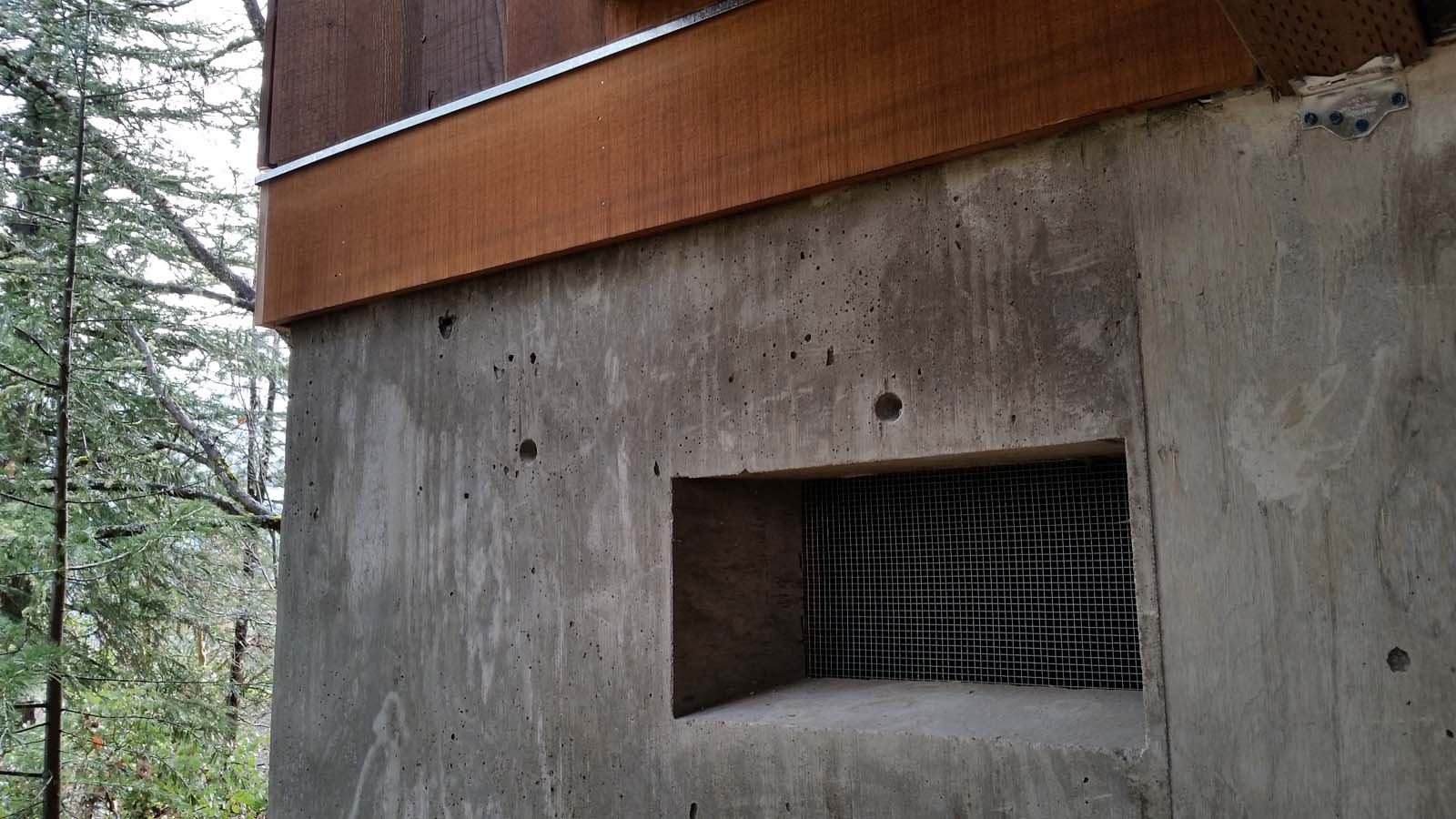
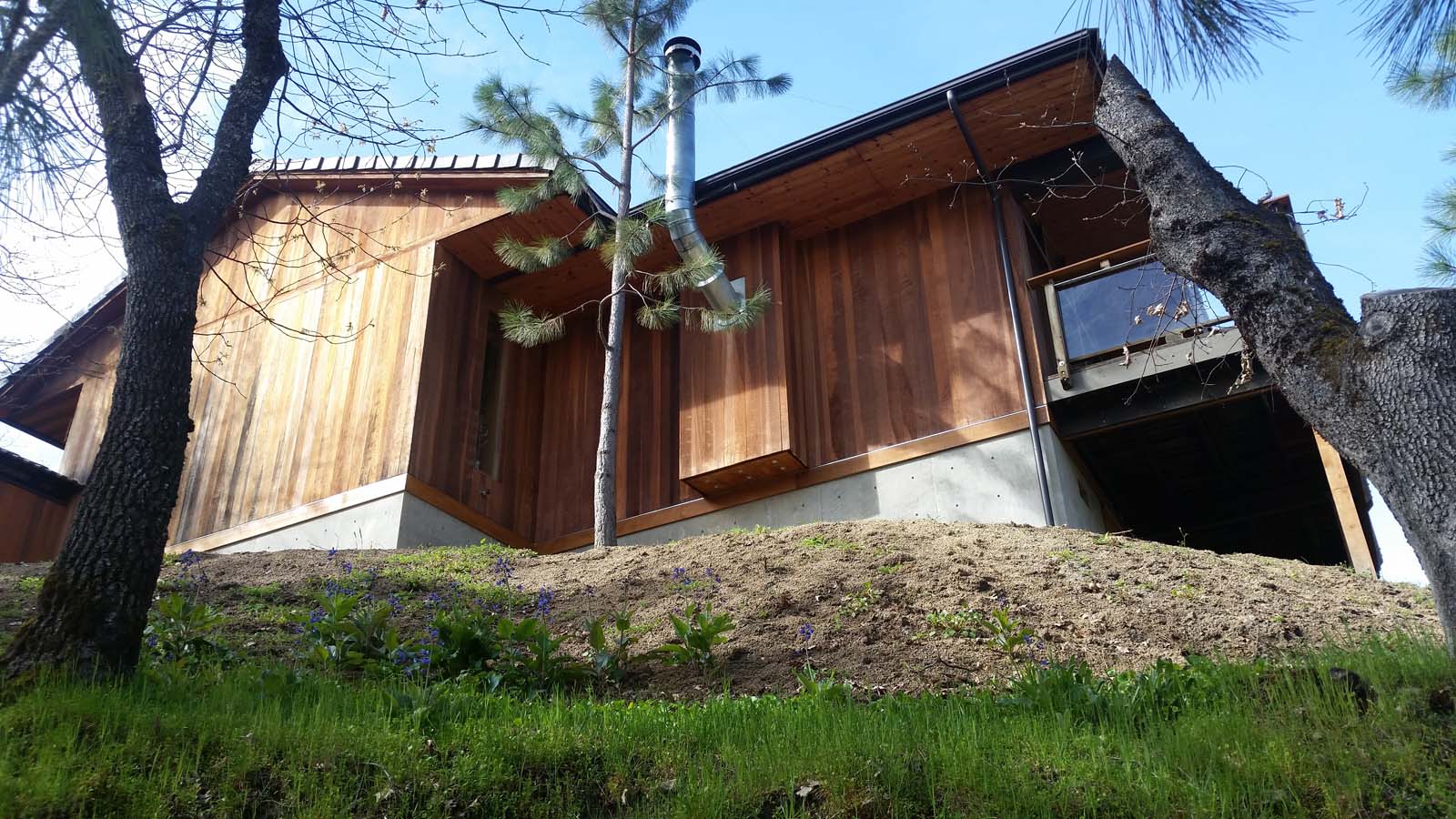
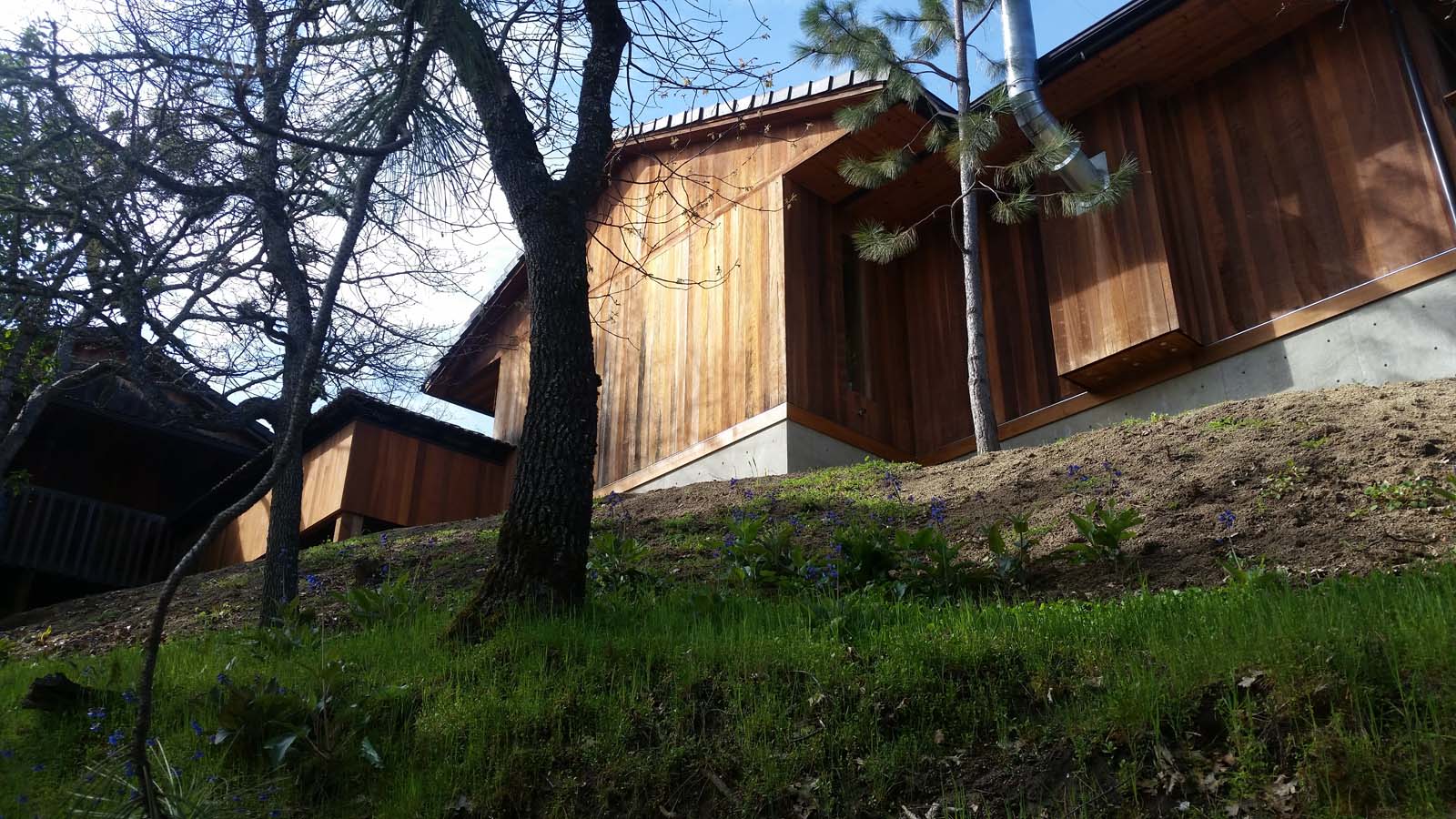
We supported, braced and leveled the building, then poured footings and full-height concrete foundation walls (stem walls) under it. The concrete was formed to leave a wood-grain texture. New beams and floor framing carry the floor and the deck, and new connections tie the building to the foundation to resist earthquake forces.
A band of clear, knot-free cedar trim runs along the base of the siding where it meets the concrete. The old insulation came out, which also took out the pests and their scent trails, and new insulation went in. The deck was strengthened and its railing replaced. We rebuilt the edge of the roof eaves, added trim boards along the roof edge and gutters, and ran roof drains and a foundation drain around the building.
Phase two: the bedroom building (2016 and 2017)
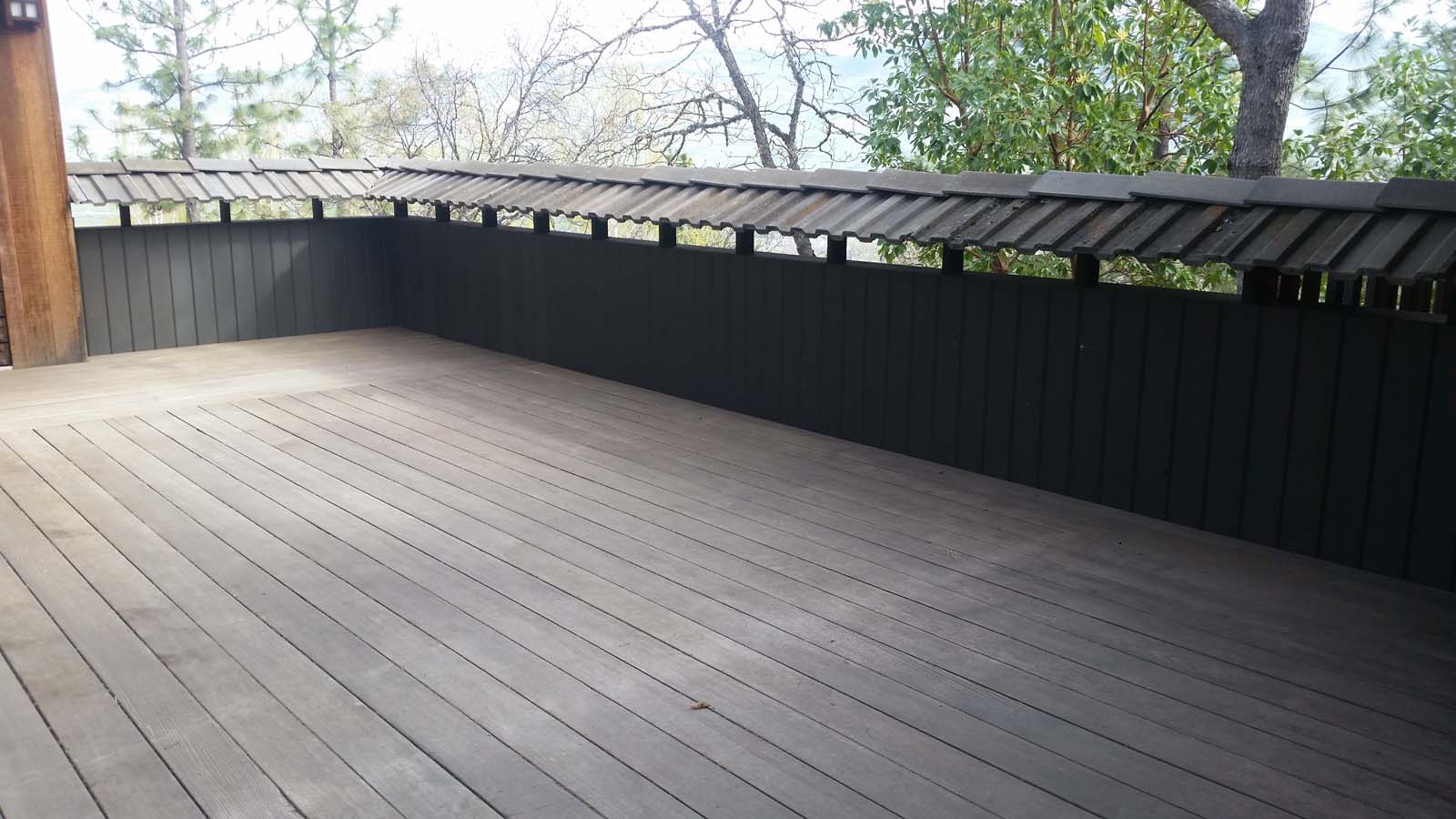
We repeated the same process under the building with the master and secondary bedrooms and its decks. We also rebuilt the low wall around the deck, lined with interlocking fir boards inside and clear cedar outside, and raised it off the deck surface so water drains under it.
What made it interesting
Each building had to be held up and braced while the old supports came out and the new foundation went in under it.
A structural engineer ran the calculations for each phase, and we drew the building plans. The site is steep and wooded, and the concrete work called for a temporary lane closure plan on the road.
The drains deal with the cause, carrying roof water away from the soil under the house.
Thinking about a similar project? Call us at 541-300-8118 or send us a note.