PORTFOLIO
C Street
A flat-roofed house on C Street in Ashland’s Railroad District got a gable roof, a full-length attic and a two-story addition, after city planning approval.
Planning something similar? Ask what your project would cost.

At a glance
- Finished: 2016
- Size: The house grew from 1,008 to 1,562 square feet, a 554-square-foot addition
Projects like this typically run $125,000 to $575,000 in our area today. See our cost guide.
Read the full case study
The house and what the owners wanted
The house on C Street was a flat-roofed two-story box, close to a cube. It sits three feet onto city land set aside for the sidewalk. In the Railroad District it counted as a non-contributing building, one that did not fit the historic pattern of the street.
The owners wanted more room. The new roof and addition also had to make the house fit the historic district better.
What was built
The roof and attic
The flat roof came off. We leveled the tops of the walls, built an attic floor over the whole house and the addition, and framed a new peaked roof with trusses raised at the edges to leave room for full insulation. The attic is about five feet high at the peak and runs the full length of the house, with skylights. It is storage you can walk through.
The addition
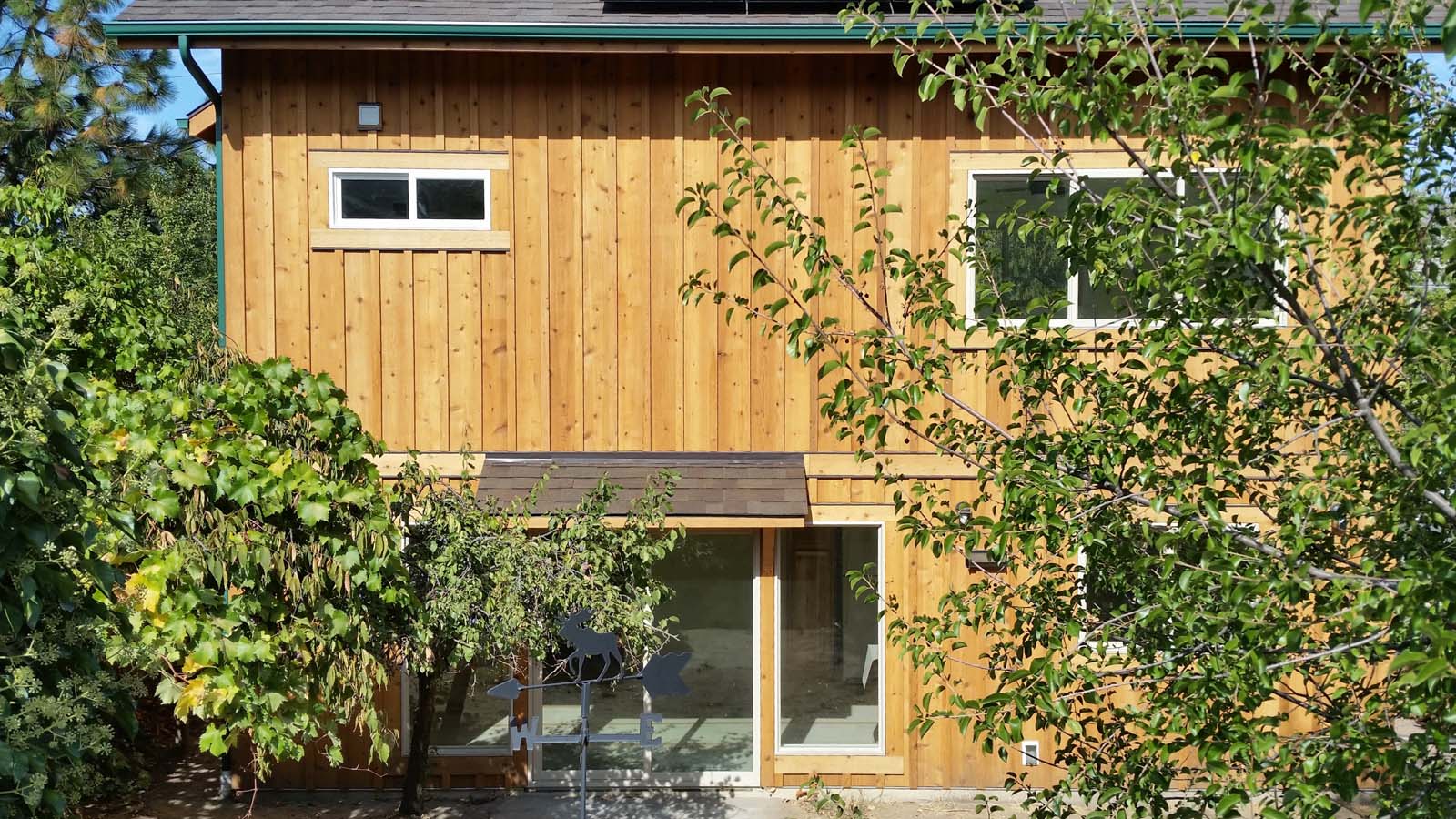
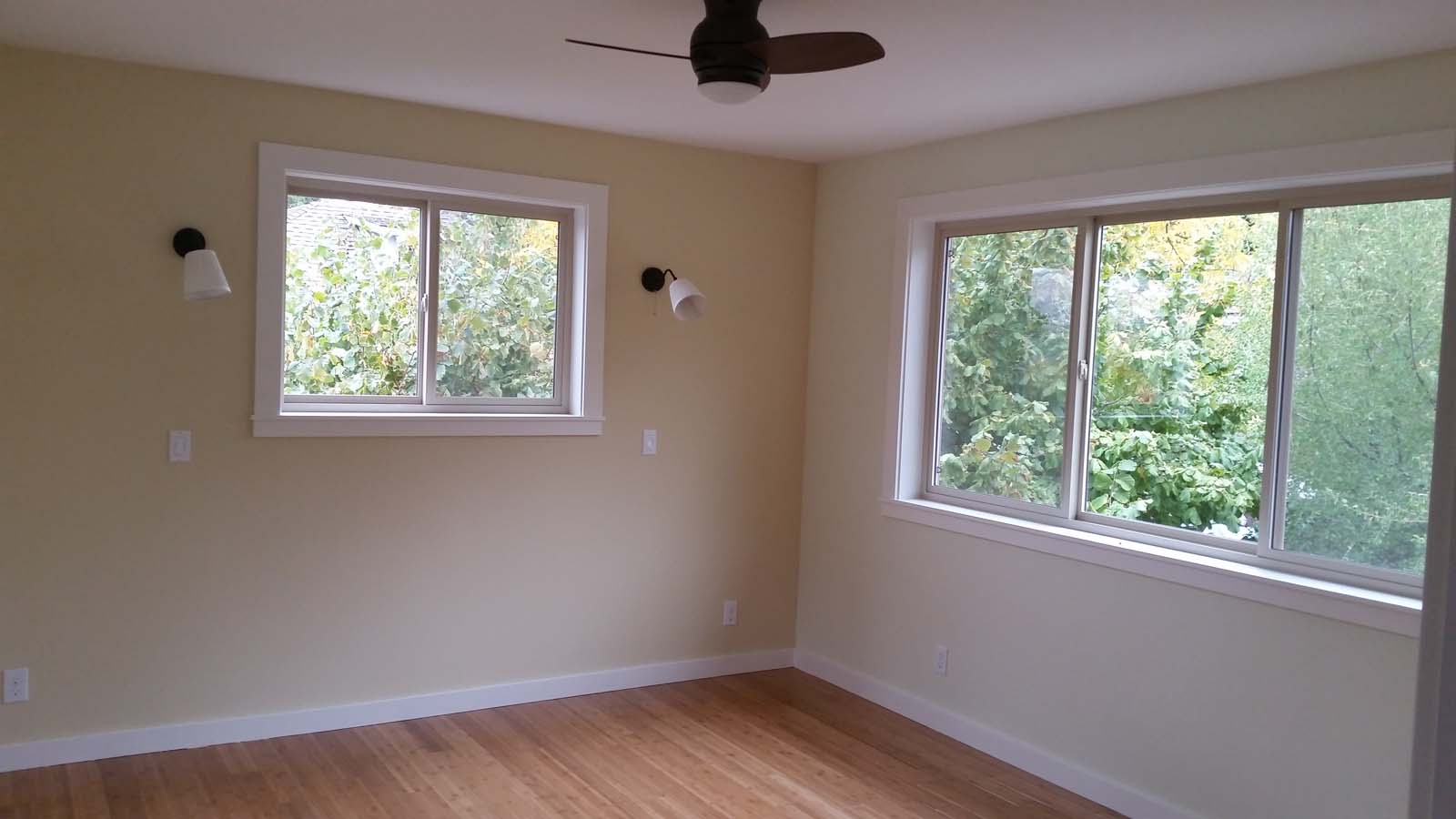
The addition is at the back of the house, so the house is now L-shaped. Downstairs is the new kitchen. The old kitchen area, on the reused foundation, is now the dining room. Upstairs, the addition extends the second floor with a bedroom, a bathroom and closets. The bathroom fan turns on by itself when the air gets humid, and a small vent lets in fresh air to replace what it pulls out. A solar light tube, a small skylight that pipes daylight down through the attic, lights the hallway.
Inside, feature walls are paneled with wood reclaimed from the original house.
Outside
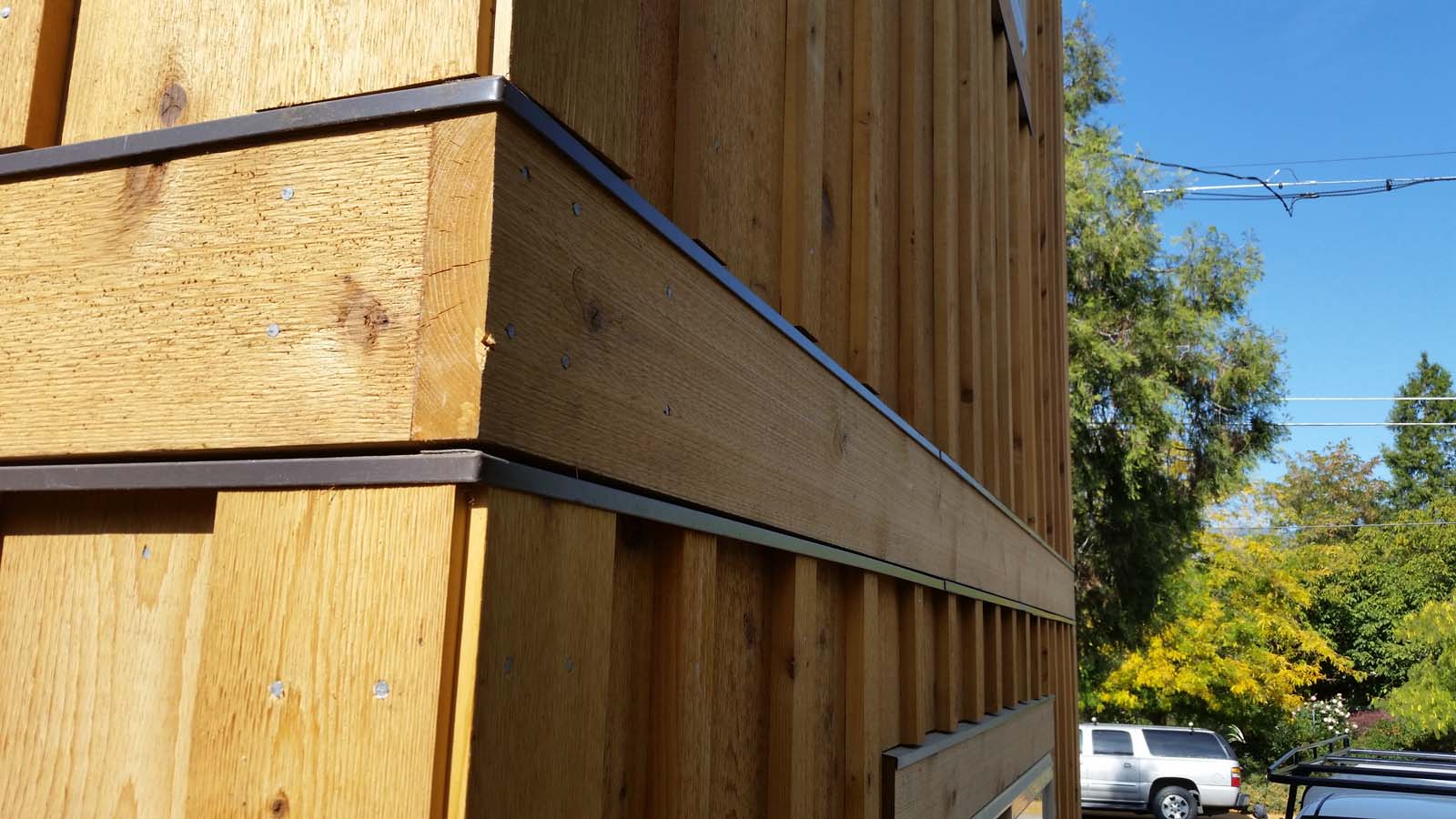
From the street, the house keeps its windows, siding and entry porch. What changed is the roof: its peaked end now faces the street, trimmed with a wide board under the eaves and a band of trim between the floors. The addition is sided in cedar board and batten, wide vertical boards with narrow strips over the seams, with a trim board at the base and a trim band between the floors, all in cedar. We also put in a new sewer line.
What made it interesting
Most of the work on this job happened before construction. Because the house already sat partly on city land, it did not meet the rules for how far a house must sit from the property line, so any expansion needed planning approval. We wrote the application for expanding the roof and adding the addition to a house that didn’t meet current rules.
The application covered the house’s fit with Railroad District standards, the floor area (just under the lot’s maximum of 1,609 square feet), lot coverage, meaning how much of the lot the buildings cover, the solar access setback, which protects a neighbor’s sunlight, and a tree protection plan for a cedar street tree with a 20-inch trunk at the front corner. Public works issued a permit letting the part of the house on city land stay.
The city’s street standards also called for a sidewalk out front with a planting strip between it and the curb. There is not room for both without removing the house. We asked for an exception so the new sidewalk could run next to the curb, with the existing street trees left in place.
Thinking about a similar project? Call us at 541-300-8118 or send us a note.